

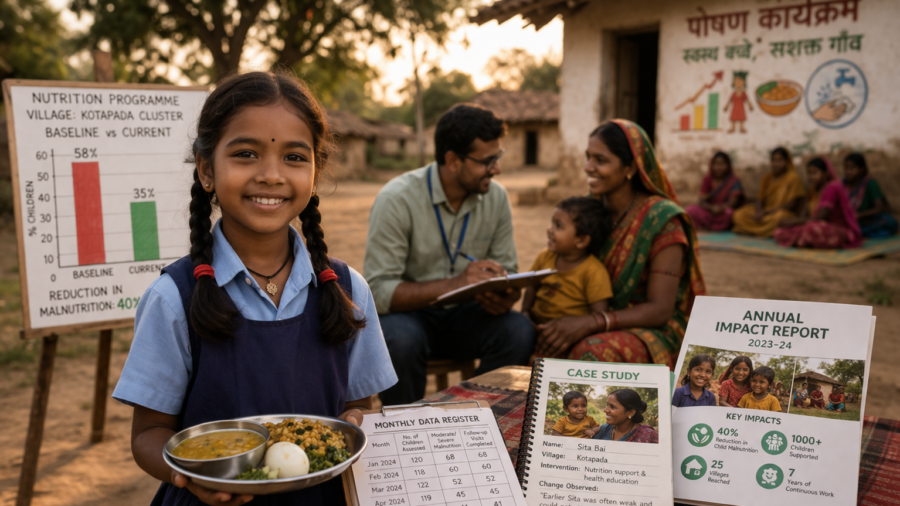
A small NGO in Madhya Pradesh had been running a nutrition programme for tribal children for seven years. Malnutrition rates in their target villages had dropped by nearly 40%. Children who once came to school too hungry to focus were now thriving. Teachers noticed it. Parents noticed it. The community noticed it.
But when the NGO applied for a major national grant, they were rejected. The feedback? “Insufficient evidence of impact.”
Seven years. Hundreds of children. Real, visible change. And yet, on paper, it didn’t exist.
This is not an unusual story. Across India, thousands of NGOs are doing genuinely transformative work — and losing funding, partnerships, and credibility simply because they cannot communicate and document their impact effectively. The work is real. But if it isn’t recorded, measured, and told well, the world will never know.
Why Impact Communication Matters More Than Ever
The development sector is changing fast. Donors — whether individual philanthropists, corporate CSR teams, or institutional funders — are no longer satisfied with activity reports and attendance registers. They want to know: What changed because of your work? How do you know? Can you prove it?
This shift is not just about accountability. It reflects a deeper maturity in the sector. Funders have limited resources and want to direct them where they will make the greatest difference. NGOs that can clearly demonstrate their impact — with data, stories, and evidence — will consistently win over those that can’t, even if the latter are doing equally good work.
Impact communication is also about more than just donor reporting. It builds trust with your community, attracts volunteers and staff who believe in your mission, creates credibility with government bodies, and positions your organization as a thought leader in your area of work.
In short: your impact is only as powerful as your ability to communicate it.
The Two Pillars: Documentation and Communication
Impact communication rests on two equally important foundations — documentation (capturing what happened) and communication (telling the world about it). Most NGOs struggle with both, but for different reasons.
Documentation feels like administrative burden — something that takes time away from “real work.” Communication feels like marketing — something reserved for big organizations with dedicated PR teams.
Neither of these beliefs is true. And letting them hold your organization back is costing you more than you realize.
Getting Documentation Right
Good documentation starts before the programme begins — not after. Here’s what that looks like in practice:
Start with a baseline. Before your intervention begins, capture the current situation. How many children are out of school? What is the average income of the families you serve? What is the health status of your beneficiaries? This baseline data is what makes your eventual impact measurable. Without it, you can only say “things got better” — you can’t say by how much.
Define your indicators clearly. What will you measure to know if your programme is working? Choose indicators that are specific, realistic, and meaningful. For a livelihoods programme, it might be average monthly income, number of new businesses started, or percentage of women with independent bank accounts. For an education programme, it might be school enrolment rates, learning level assessments, or dropout rates.
Collect data consistently. Data collection should be a routine part of your programme — not a last-minute scramble before the donor report is due. Train your field staff to maintain registers, use simple mobile-based tools like KoboToolbox or Google Forms for data entry, and review data monthly.
Document stories, not just numbers. Numbers tell funders what changed. Stories tell them why it matters. Make it a habit to record case studies — real people, real names (with consent), real changes. A well-written case study of one beneficiary can do more to move a donor than a spreadsheet of a thousand data points.
Maintain a programme file. Every programme should have a living document that captures objectives, timelines, activities conducted, attendance, challenges faced, and learnings. This is your institutional memory — and it makes donor reporting infinitely easier.
The Art of Communicating Impact
Once you have your documentation in place, the next step is telling that story effectively — to the right audiences, in the right formats.
Know your audience. The way you communicate with a corporate CSR manager is different from how you speak to a grassroots donor or a government official. A CSR manager wants ROI language, alignment with business goals, and measurable outcomes. An individual donor wants an emotional connection and to feel that their contribution made a real difference. Tailor your communication accordingly.
Annual Impact Reports. Every NGO, regardless of size, should publish an annual impact report. This doesn’t need to be an expensive, glossy brochure — a clean, well-structured PDF shared digitally can be just as powerful. It should include your mission, key programmes, beneficiary data, financial summary, and a few compelling stories. Think of it as your organization’s annual report card — honest, clear, and credible.
Social Media as a Documentation Tool. Platforms like Instagram, LinkedIn, and Facebook are not just for marketing — they are powerful tools for real-time impact documentation. A short video of a beneficiary sharing their experience, a photo series from a field visit, or a simple infographic showing your programme data can reach thousands of people and build ongoing trust with your community of supporters.
Case Studies and Testimonials. These are your most persuasive communication assets. A well-crafted case study follows a simple structure: who was this person before your programme, what did your programme do, and what has changed for them now. Keep it human, keep it specific, and always get written or recorded consent from the individual.
Donor Reports That Go Beyond Compliance. Most NGOs write donor reports because they have to. The best NGOs write them as an opportunity — to strengthen the relationship, demonstrate learning, and make the funder feel proud of their investment. Go beyond the numbers. Share what worked, what didn’t, and what you’re doing differently as a result.
Common Mistakes NGOs Make
Even well-intentioned organizations fall into predictable traps when it comes to impact communication. Watch out for these:
Claiming impact without evidence. Saying “we transformed 500 lives” without data to back it up damages credibility. Be specific and honest — even modest, well-documented impact is more compelling than inflated claims.
Only communicating when fundraising. If your supporters only hear from you when you need money, they’ll start to tune out. Build a culture of regular communication — monthly newsletters, quarterly updates, social media posts — so that your community stays engaged year-round.
Ignoring negative findings. No programme works perfectly. Donors and partners respect organizations that acknowledge challenges and share learnings openly. Hiding failures doesn’t build trust — owning them does.
Using jargon-heavy language. Terms like “holistic empowerment,” “multi-dimensional poverty alleviation,” and “transformative systemic change” have become so overused that they’ve lost all meaning. Write for a reader who knows nothing about your sector — be clear, be specific, be human.
Building a Culture of Documentation in Your Team
The biggest barrier to good documentation isn’t resources — it’s mindset. Field staff often see paperwork as a distraction from their actual work. Programme managers feel like data collection is “someone else’s job.” Leadership teams assume documentation will happen automatically.
It won’t — unless you build systems and culture around it.
Start by making documentation a non-negotiable part of every programme design. Include data collection responsibilities in job descriptions. Allocate specific time in weekly routines for updating records. Celebrate good documentation the same way you celebrate programme milestones. And invest in simple, mobile-friendly tools that make data collection easier for field teams.
When documentation becomes a habit — not an afterthought — your organization’s ability to communicate impact transforms overnight.
Final Thought
There is a saying that is quietly true in the development sector: the best-documented NGO often gets the grant, not the best-performing one.
That’s not entirely fair. But it is the reality. And the good news is, it’s entirely within your control to change. You don’t need a communications team, an expensive consultant, or a big budget. You need a system, a habit, and a commitment to telling your story with honesty and clarity.
Your work is making a difference. Make sure the world knows it.